Friday, September 27, 2013

Google's Innovation


Time Magazine this week featured Google's innovation machine and what Google refers to as "moonshots" or innovation that is 10x greater than anything else in the marketplace.

Another key feature of brave companies or corporate leaders who know the face of bravery are those with a long-term perspective.  They understand that enduring companies are built over long periods of time and not quarter to quarter succumbing to investor pressure.


The article had a great quote about Google's view on innovation.  Many companies are more focused on how to incrementally improve on their core products to protect it against competition.  What ends up happening is a myopic view of innovation that prevents companies from making real breakthroughs.  Google's moonshot approach can be summed up in one quote:
"Guys like Larry (Page) don't focus on preserving value; they just work on building new value."
That sounds fine when you have tens of billions of dollars to spend on innovation and create many expensive flops but that can't work for all companies.  But the mindset is an important one and practically, even Google takes a rational approach - they don't just throw billions of dollars at a given category:
"Page has also concentrated on avoiding flops like Wikipedia knockoff Knol and Google Buzz, a Twitter clone almost nobody wanted to use.  He has done this in part by ratcheting down the number of new product introductions and axing existing projects in period 'spring cleanings'.  He has in a memorable phrase, declared his intention to put 'more wood behind fewer arrows'."

Tuesday, September 24, 2013

The Female Executive You Probably Never Heard Of


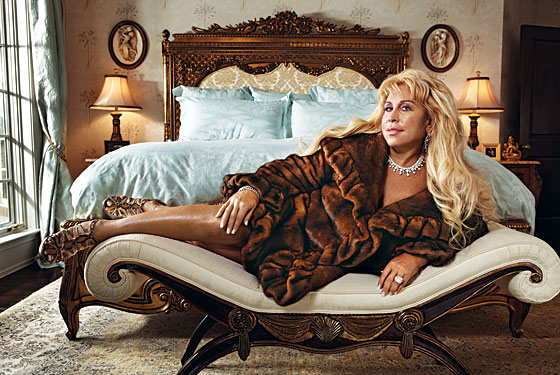
Lynn Tilton is the focus of our current post on corporate bravery and there are a lot of brave things to spotlight her for.  Being a single mom and building a private equity empire or focusing on saving American manufacturing jobs could be the focus of her bravery.  But I am using this post to spotlight her individuality.

Lynn Tilton runs the Patriarch Partners private equity firm.  An $8 billion company that has bought or heavily invested in over 70 - largely manufacturing - companies.  If you want a detailed history of how she got where she is (and it is truly a triumph of the American dream) then go to her Wikipedia page.


As I have been writing my book on corporate bravery one of the key aspects of a brave culture that eschews fear-based management is a support of individuality.  Not just for the people who work for the organization but also the organization's identity itself.

As it relates to Lynn's views on her own individuality and how it translates to women in the workforce as a whole:

“I’ve gotten used to [walking in heels like this]. When people talk about me as a Wall Street, stiletto-wearing chick … the stiletto part is right, but I really don’t consider myself Wall Street. I take pride in being an industrialist. I understand that people write about what I wear and what I look like because it’s an anomaly. But to only focus on those things is to really miss who I am. I’m trying to show women that they need to be women in a man’s world.”

And then in terms of the fund's strategy and the laser focused clarity on creating jobs in situations where smaller companies have lost their focus on their core product and their marketplace:

We feel strongly about buying companies that others would throw on the trash heap, as a way to create jobs, to give people the dignity of work. And what I’m hoping is that I’m going to help make manufacturing sexy and exciting again.

Tuesday, September 17, 2013

Steve Case's Second Act - Legislative Bravery


BusinessWeek recently profiled Steve Case's ascension to similar heights that he once reached during his AOL days over a decade ago.  What I found most interesting about this article is how Steve has performed this feat - by embracing the legislative process and helping shape legislation that benefits his business interests.

One of the key elements of fear-based decision making is the role of regulation in a particular industry. As I am writing about in my upcoming book one of the best ways to be brave in the face of regulation is to get out in front of it.  Embrace the legislative process and be a part of it so you can capitalize on the shifts in the market that regulation creates.  While It takes bravery beyond just being engaged in the legislative process (something I will cover in more detail in a later post) being engaged is the first step.

Steve Case has gotten engaged in spades.  Since his time at AOL & the combined AOL Time Warner he has been engaged in the following ways:


  • In early 2011, he was selected by President Barack Obama to serve as Chairman of the Startup America Partnership

These are just his governmental roles and doesn't factor into his controlling interest in Revolution and its collection of companies.


According to the BusinessWeek article, "Case has become a genuinely productive figure in Washington—one of the few bipartisans who can take a meeting with the Obama White House one day and congressional Republicans the next, with actual legislation to his credit."
Not only has Steve Case become engaged in the legislative process but in many cases he is help leading the process and has become a good resource for bringing the two sides together into substantive conclusions.  This year's Congress has become known as the most grid-locked and 'do nothing' Congress that Steve has found a role in helping to bring parties together for progress towards goals.
“He’s really become a very serious and effective advocate,” says Gene Sperling, director of the National Economic Council. “He is not a flash in the pan. He is focused. He is substantive. And he stays at it. There are not that many people who are willing to make a real ongoing commitment of their personal capital to learning the ins and outs of our sometimes crazy world.”  In Case’s political work, there are shades of how he built AOL—not with blazing charisma, but through extreme persistence, taking every meeting and being content with the good instead of the perfect.
Not only is Steve not afraid of the political process but he has embraced.  He has spurned silicon valley as a home and has put down his roots in the Washington DC area where he can be closer to the action and be more effective:
The simplest reason for politicians’ embrace of Case may be that he does not hold them in contempt, the way much of Silicon Valley seems to do. In caricature, tech leaders are libertarians who like to “move fast and break things,” as Facebook’s credo goes, and who look down on people in Washington as their constipated opposites. “They have a total disdain,” says Mark Warner, the Democratic senator from Virginia. “It’s always good to have a healthy disdain for politics. But there’s almost this naive arrogance to it, in the sense that they don’t really want to know how hard it is to get from A to Z.
Case has had a lot to gain personally for all this effort, not just on the Venture Capital side for Revolution but also some of Revolutions's core businesses depend heavily on the flow of foreign workers that are at the heart for his most recent push towards a compromise on immigration reform.
A grateful VC industry is on the receiving end of Case’s efforts. The JOBS Act contained multiple sweetheart provisions for technology companies
At the heart of all this work is opportunity.  Not just to create a stronger legacy but to find new frontiers for his cash and better returns.  His access and influence in Washington allows him to think more strategically about where his investments should flow and capitalize on the likely outcomes of emerging legislation:
Legacy or no, Case sees a huge opportunity at the junction of his two passions, entrepreneurship and policy. He recognized, when few others did, that the Internet would become part of everyday American life, remaking everything from personal finance to advertising. Now Case argues that the last few industries on the brink of being revolutionized by the Internet—health care, education, transportation—happen to be ones in which the government plays a gigantic role in purchasing and rulemaking.


Wednesday, September 11, 2013

Brief Departure for Thoughts on 9/11


I know we generally talk about corporate bravery on this site but today is reserved for bravery of another kind.  Twelve years ago today many first responders in NY and DC risked their lives and many eventually lost them in a terrible attack on our country.  While you might think that I would reserve this post to salute those men and women who did risk their lives (and I do) the other heroes from that day are all of you for continuing to live your lives without fear of commercial flights, large public gatherings, or anywhere else that terrorists have sowed the seeds of fear.

While sadly, we continue to lose freedoms and sink into an ever more dreadful march towards fear, the United States wasn't founded with that culture but rather one of bravery.  Those early pioneers had a lot to fear but they persevered despite a long and uncertain sea voyage.  Our ancestors persevered despite the British desire to hold onto us as a colony, and again in the face of tyranny and destruction that was the Nazi party and eventually led us into world wars.  They persevered through famines and economic crashes and each time bounced back stronger than before.

So I salute every American today who continues to live their lives without fear of bombs and without feeling the need to add layers of security that only provide a false illusion of safety.

Thursday, September 5, 2013

Corporate Bravery's Tribute to Breaking Bad


I ran across this great article about David Gilligan, the creator of Breaking Bad, my favorite show on television (just making my biases known), and the managerial lessons we can learn from television show creators in Fast Company magazine.

Some of the highlights include

  • The relationship of the runner, the second in command, and the creator and how that relationship is critical to the success of the show.
  • Management styles in general for show creators
  • How the creative process can be successful
I will leave you with 1 good quote from the Q&A session that highlights the fact that a successful show must have writers without a fear of rejection / failure - but the article as a whole is a must-read:
A show runner needs to create a safe space. To be a writer in these rooms is to be rejected constantly. It’s brutal. So the ability to inspire people despite rejecting them is really important. A writers room on the one hand is a professional atmosphere, but it’s immensely fraught with all the things you think would happen if you put a bunch of creative, neurotic, striving, competitive, insecure people in a room together and told them to bare their hearts and face rejection or acceptance.

Monday, August 26, 2013

The Culture of Costco


I hate feeling like I am just on a bandwagon and I generally like to move in the opposite direction of the crowd but Costco is one company that isn't a fad, rather has consistently produced results year after year.  Yes, it may be a darling of wall street but there is a reason for its impressive performance and I would like to focus on the cultural aspects of this performance in this post.

Once again a BusinessWeek article is the focus of the content for this post and their recent article entitled "How Cheap is Craig Jelinek?" - focused on the CEO of Costco.  As you read through notice the following ways that the Costco culture is one of corporate bravery.

1. Employee culture - pay nearly 2 x industry average.  No massive downsizings during the recession has led to some of the most engaged employees in retail.  Result is employees have less employment anxiety.  Another example of this is the health benefits provided to their employees:
Costco workers with [health] coverage pay premiums that amount to less than 10 percent of the overall cost of their plans. It treats its employees well in the belief that a happier work environment will result in a more profitable company. “I just think people need to make a living wage with health benefits,” says Jelinek. “It also puts more money back into the economy and creates a healthier country. It’s really that simple.”  In February, Jelinek set Costco’s convictions in ink, writing a public letter at the behest of Nader, urging Congress to increase the federal minimum wage for the first time since 2009. “We know it’s a lot more profitable in the long term to minimize employee turnover and maximize employee productivity, commitment and loyalty,” he wrote.
2. Costco doesn't have teams of public relations and corporate attorneys like many corporations do when they reflect their corporate fears of lawsuits, bad press, and the sometimes negative consequences of someone grinding an axe.
Costco has no public-relations staff. Jelinek conducts an interview with a journalist alone, an anomaly at major corporations, and afterward Costco Chief Financial Officer Richard Galanti calls to inquire whether the boss inadvertently said anything negative. Sinegal returns a reporter’s phone call on a Saturday morning, leaving his cell number.
In February, Tiffany (TIF) filed a multimillion-dollar trademark infringement suit against Costco alleging it improperly labeled merchandise as “Tiffany engagement rings.” Galanti calls it “an honest mistake” and says they should have been labeled “Tiffany-style.” The suit is pending.
labeling something an honest mistake would be a major no-no in a company driven by legal fear as it implies some level of culpability.

3. They are not overly driven by fear of their competition..... although the BW article include wariness towards Wal-Mart's overall size and Amazon's web capabilities but the focus of those comments were more around concerns about consumers' shifting habits.
“They are buying and selling more olive oil, more cranberry juice, more throw rugs than just about anybody,” says David Schick, an analyst at Stifel Nicolaus. And that allows Costco to get bulk discounts from its suppliers, often setting the industry’s lowest price. Even Amazon can’t beat Costco’s prices, which means that “showrooming,” or browsing in stores but buying online for the better price, isn’t much of a concern for Jelinek.
It is because they know who they are and how they best compete in the marketplace.  This extends to their vendor relationships as well.  Even though a product would be great for their customers - if the vendor places restrictions on the sale that do not match how they go to market they have a stern response:
Costco is sensitive to any perceived slights from its vendors. It canceled a relationship with Apple (AAPL) in 2010 because the company wouldn’t sell it anything other than the iPod, and wouldn’t allow it to sell any Apple products online. It has also at times curtailed its sale of products from Sony (SNE) andPanasonic (6752:JP) over such issues.
4. They are not driven by investor fears as demonstrated by this excerpt from the BW article regarding wage increases during the Great Recession and investor pressure to do otherwise.  They have a long-term perspective and are focused on doing the right thing for the employees even at a detriment in the short-term.
Costco went public in 1985, and over the years, Wall Street repeatedly asked it to reduce wages and health benefits. Sinegal instead boosted them every three years.
As the economic downturn worsened in the fall of 2009, Costco, like every other retailer, started seeing declines in same-store sales. Macy’s (M), Best Buy (BBY),Home Depot (HD), and Office Depot (ODP) were resorting to layoffs and wage cuts, but Sinegal approved a $1.50-an-hour wage increase for hourly employees, spread out over three years. “The first thing out of Jim’s mouth was, ‘This economy is bad. We should be figuring out how to give them more, not less,’ ” says CFO Galanti, who adds that Sinegal’s decision to parcel out the raise in three annual 50-cent increments, instead of more gradually, cost an extra $20 million. The founder’s stubborn resolve remains a point of pride. “Could Costco make more money if the average wage was two or three dollars lower?” asks Galanti. “The answer is yes. But we’re not going to do it.”
Why is culture so important?  Because all of these examples where decision making wasn't being done out of fear - rather out of conviction and knowing who they were as a corporation occurred during and after a CEO change from the original founder.  Organizations who do not have a full appreciation for who they are quickly change their behaviour once the previous leader has moved on and that has not occurred with Craig Jelinek (pictured below - right).