Showing posts with label corporate politics. Show all posts

Wednesday, August 26, 2015

The Point of the Amazon NY Times Article

There has been a lot of conversation about the recent New York Times piece on Amazon.com. While there has been some negative backlash from Bezos and insiders at Amazon, it appears, based on other accounts that the author's perspective on the culture at Amazon is closer to reality than fiction.


But as this Fast Company article points out, why has this article about work culture in the tech industry created so much buzz? Isn't it true that Amazon's culture just mirrors that of silicon valley or other great technology centers in the United States?

For many in the business press it is seen as yet another example of a 'win at all costs' culture that typically drives disengagement and an unhappy workforce. Typically I would decry the kind of behavior and attitudes embodied in the Amazon culture. For example, take a look at this early quote in the article:
At Amazon, workers are encouraged to tear apart one another’s ideas in meetings, toil long and late (emails arrive past midnight, followed by text messages asking why they were not answered), and held to standards that the company boasts are “unreasonably high.” The internal phone directory instructs colleagues on how to send secret feedback to one another’s bosses. Employees say it is frequently used to sabotage others.
This is the kind of fear inducing behavior that creates corporate politics run amok - similar to what I discuss in this my Slideshare on corporate politics.

However, I have a different perspective on this particular story. Understand that I am not condoning this type of behavior or even the culture that has been created but it can make sense for a company like Amazon. Take a look at this quote from the story about the conflict that employees feel about the culture:
However, more than 100 current and former Amazonians described how they tried to reconcile the sometimes-punishing aspects of their workplace with what many called its thrilling power to create.
I contend that Amazon has actually done a wonderful job of creating alignment with the culture, hiring & people practices and the brand they are creating in the eyes of their customers.

In my forthcoming book, Corporate Bravery, I argue that one of the hallmarks of fearful vs brave organizations is alignment of these three aspects of culture.

According to the article Amazon has very clearly defined core values (of which they are quizzed and expected to be able to recite and they have a clearly aligned hiring process as shown in the following two quotes:
To be the best Amazonians they can be, they should be guided by the leadership principles, 14 rules inscribed on handy laminated cards. When quizzed days later, those with perfect scores earn a virtual award proclaiming, “I’m Peculiar” — the company’s proud phrase for overturning workplace conventions.
The process begins when Amazon’s legions of recruiters identify thousands of job prospects each year, who face extra screening by “bar raisers,” star employees and part-time interviewers charged with ensuring that only the best are hired.

Which leads to a process where employees begin to internalize the culture. According to one person interviewed for the article "she and other workers had no shortage of career options but said they had internalized Amazon’s priorities."
Again, I am not advocating Amazon's culture or the individual aspects of the culture that has made it what it is today. I am just saying that the article paints the picture of a company that has one of the most aligned core values, hiring practices and communications that I have ever seen.

Where Amazon runs into criticism (and the article chronicles), is in the moral / human cost of this culture.  If you could only have this type of alignment that values the employee as a human and recognizes their own individuality (coincidentally another fear factor chronicled in Corporate Bravery) then you have a great example of building a corporate culture.

Wednesday, July 29, 2015

Corporate Politics - Good or Bad?

Often the phrase corporate politics leads to emotional reactions. It could be greeted with eye rolls or a sinking feeling inside your gut.

In the forthcoming book Corporate Bravery we spend a chapter on corporate politics and its role in creating a fear based culture. While there are many examples where corporate politics has gone wrong, I have created the embedded slide share to talk about how corporate politics doesn't have to be a culture killing practice.


I have embedded a slideshare below and I would love to hear your personal stories, feedback on the approach or other ways you have seen corporate politics play out in a good way. The comments section is below.


Wednesday, June 10, 2015

Weekly Roundup - Auditors, Regulation & Disney

This week's roundup doesn't really include any brave examples, rather some recent stories that represent some common themes from my upcoming book on Corporate Bravery.


1. The May 2015 issue of Fast Company profile's Disney's attempt to completely reinvent the guest experience at their theme parks. The initiative was 'green lit' in February 2011 and was centered around the use of technology, specifically the park wristbands as a part of the MyMagic+ project.

The project started out as a grand vision of using the wrist band to not only get a fast pass to the best rides but create a digital infrastructure that allowed all park employees to create a tailored experience for each individual guest. However after many setbacks along the way it has found only limited usage and primarily as to buy things at the park.

The article chronicles the political struggles inside Disney that challenged the project's original vision and has ultimately prevented the project team from getting the types of ROI that were possible. Some of the quotes from the article that highlight these political struggles include:
"Franklin managed to get some teams to collaborate well on the project, but most describe the internal politics as fierce."
"Other divisions expressed themselves passive-aggressively. "They might see a problem coming, but they don't do anything about it, like, 'Let them figure it out!' says a former Disney manager. 'Then, late in the game, these folks came in going. We knew this was going to be a problem.' We were like Really? Where have you been for the last three and a half years?!?"
"The endless finger pointing and glory hogging slowed the ambitious project. "Almost half the work was to support a political situation," says one executive at an NGE partner company. "At the beginning, we could move really rapidly, but when it got public within Disney, it changed the way we worked. It became more about fighting to survive another day."
Reading these quotes bring to mind my experiences as a business sponsor for a large multi-year, multi-million $ project that I lead a few years ago. I am sure my experiences and Disney's are not isolated examples and the role that politics plays in creating an organization that is driven by fear is universal.

Tuesday, April 21, 2015

The Weekly Fearful Roundup

This is a new feature that I am starting this week to highlight examples I see in business & life where fear is ruling our decision making processes.

1. Lets start this week with a Vanity Fair article on the Brian Williams mess, but more specifically the fall of NBC News and how it happened. It is a fascinating read on the impact of mergers and acquisitions on corporate culture and how not to handle employment decisions.


My favorite excerpt from the article is the following two paragraphs that highlight poor leadership, lack of trust, corporate politics and how they each can play a role in fear-based decision making.

According to one view, the Burke administration’s troubles at NBC News can be traced to the Ann Curry episode at Today, a messy situation it inherited from the Zucker regime. Line executives were sharply split over Curry’s desire to ascend from newsreader to Lauer’s on-air partner. The head of news, Steve Capus, was in favor; Today’s executive producer, Jim Bell, and Matt Lauer were wary. Capus prevailed, only to watch Curry’s ratings slide. By June 2012, when she memorably and tearfully announced her departure from Today, Capus and Bell were not speaking. “That’s where this whole thing begins to fall apart,” says the onetime executive. “Burke was the principal player [who made the decision to demote her], though he hid desperately behind this. Finally he makes a deal for her to go away and then gets cold feet about pushing her to announce it. Despite pleas from everyone, Burke would not push the situation. He just felt uncomfortable doing it, and he wouldn’t explain why. Which leads directly to this thing being a national ‘Oh, poor Ann Curry’ story, which was the furthest thing from the truth.”
The Curry saga convinced Burke that the news division under Steve Capus’s direction was broadly dysfunctional. “The prevailing line from the Comcast people when Steve Capus was in charge was all News needs is a real grown-up in there,” says a top NBC executive at the time. “You know, ‘These people don’t know how to run a business. What they need is organization. Change the structure, business development, better H.R., get some women in there.’ I mean, that’s verbatim. That was the script.” Bell was removed from the equation when Burke gave him the Olympics to supervise, but Burke wanted deeper changes. Insiders believe he found the Curry episode so distasteful that he resolved to distance himself from the details of talent management altogether. “This thing exploded into a soap opera, and let me tell you, it scared the hell out of Steve Burke,” recalls an executive who met with Burke regularly. “And that’s not a phrase you use about a tough guy like Burke. But I saw it.”

2. Next, I recently read about this new company that is participating in a business accelerator that I am familiar with.

Thursday, April 24, 2014

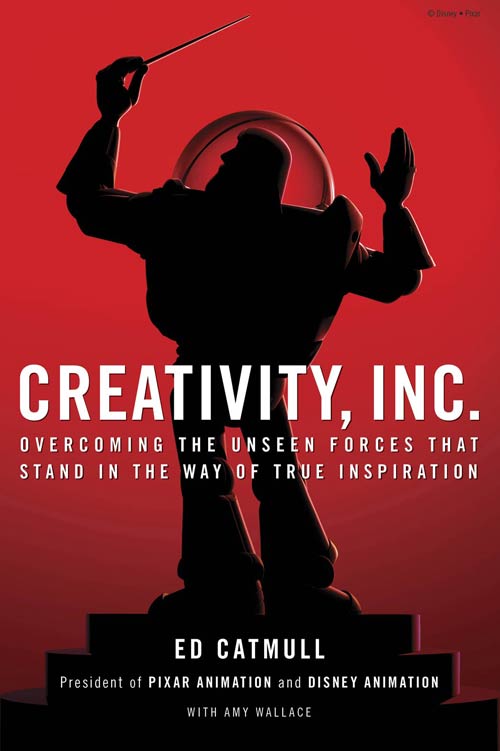
An Inside Look at Pixar's Bravery

Courtesy of Pixar Animation Studios
 
I was excited when I heard that Ed Catmull was releasing a book earlier this year.  It is not as though I knew a lot about Ed, but I had read about him in previous tomes on Steve Jobs and because of the perspective of those other accounts I had assumed that it was Jobs' magic touch that had given Pixar it's DNA.

However, when you consider that Ed has been a constant from the earliest days in Lucas Films to the Steve Jobs run standalone Pixar and now under the control of Disney - you start to realize that he has been a bigger part of the magic than perhaps people really understood.

As a result of this book the spotlight is being shown on Pixar as a business and there have been some great articles of late discussing the magic that is Pixar.  One of the more comprehensive reviews is the recent article in Fast Company.  If you don't have time for Ed's book in the short-term then you must read this article for a nice primer - chances are you'll be wanting more.


The article gives some amazing insights into not only the aspects of Pixar's culture but some of what created and continues to sustain that culture.  It is important to understand some of those aspects because they have been extremely successful.  Consider the following:
  • 14 consecutive #1 box office hits
  • Over $7 billion in world box office receipts
Some of the great quotes from the article that provide insights into a brave organization include....
"They threw you into a lot of different things to try and eliminate fear from the creative process," he says. This meant improv classes, drawing classes, learning from people who were the best in their field--all in the interest of attaining confidence in your own artistic ideas. “Fear is the biggest killer of creativity,” Schlumberger says. “In order to cultivate a strong creative environment, you need to make people comfortable in expressing their ideas."

Wednesday, December 11, 2013

Nelson Mandela and the Art of Politics


Yesterday I wrote about Nelson Mandela's view on fear and the lesson it provides us today in our busy corporate lives.  Today I want to focus on another Mandela quote that teaches us about a component of living a brave corporate life.
"A good leader can engage in debate frankly and thoroughly, knowing that at the end he and the other side must be closer, and thus emerge stronger.  You don't have that idea when you are arrogant, superficial, and uninformed."
I spend a whole chapter in my upcoming book Corporate Bravery on politics.  Not the politics that we think of from Fox News and MSNBC but the true essence of politics.  Corporate politics has the ability to inject fear into a corporate culture but that doesn't have to be the case.  Politics are an essential part of getting things done since at its core it is just finding common ground between two differing perspectives or positions.

Whether in business or in government the true art of politics has been lost.  Listening to opposing positions, searching for a compromise, using the power of a position to move people closer to a reasonable solution are all lost arts.  However, they are extremely necessary for a functional organization.

This infographic from the Economist highlights the growing divide of politic discourse in our government and unfortunately we imitate in a corporate context what we see played out on television in our government.

Jack Welch had this to say about the lost art of schmoozing - his way of saying politics:
“You have to schmooze.  You can’t suddenly burst out of your office to build relationships when you hear rumbles of trouble from down below, and it’s certainly too late by the time a crisis flares. No, schmoozing has to be what you do all the time as a leader; it has to be a massive part of your job.
Building — in two big fat words — trust and transparency.  And look, we’re not talking about the standard, ho-ho-ho kind of social schmoozing you do with your customers and your team and your boss. That’s easy. That’s like President Obama schmoozing with Nancy Pelosi, or John Boehner schmoozing with Eric Cantor.
Leaders have to do something harder and more essential; something that can feel awkward at first. You have to schmooze with your known “adversaries” too, say, for instance, your union, or the group of employees who hate your new strategy and want the old one back. The resistors that exist in every organization. The perennial naysayers. Smart and annoying. Them.”
Nelson Mandela understood this better than anyone.  He built trust with his adversaries.  They may not have agreed with his position but through the trust that he had built they were willing to work with him to find a better solution.