Wednesday, December 9, 2015

What Morgan Spurlock Can Teach Us About Brave Business


I recently watched this Ted Talk by Morgan Spurlock that is an oldie but a goodie (released in 2013). For those of you that may not be familiar with Morgan he came to fame with his documentaries the most famous of which is Super Size Me. He parlayed that success into a series on A&E entitled 30 Days in which he walked in other people's shoes to provide a perspective on issues that were controversial at the moment.

What I like so much about his Ted Talk is how he exposed the fearful decision making in the Advertising industry. But this isn't a hit piece on that industry and the same decision making processes and cultures exist in any industry and in most organizations.

One of my favorite moments in the talk involves a clip at the 10 minute mark where he is meeting with the Ban deodorant marketing execs and asks them what the one word they would use to describe Ban and there is silence. Then the first answer is superior technology... for deodorant!

Some of the takeaways from the talk include:
1. The brands that were obviously brave and took a risk with Spurlock's movie were ones that cut out the middle man (advertising agency) because they understood that they may not have the brand's best interests at mind. This is a theme covered in my book Corporate Bravery.
2. Spurlock's summation of what he experienced with trying to make the movie was, "When you train your employees to be risk averse, then you train your whole company to be reward challenged."
3. It is remarkable that EMC won the rights for his Ted Talk with just over $7K. A small sum for the millions of views that this clip has experienced.

Sunday, November 29, 2015

Fearful Business Examples to End the Year


  • Micromanaging
  • Being inconsistent 
  • Outsource too much
  • Don't embrace new employees

These aspects are all ways that coincidentally can create a culture of fear. When the author wrote the headline for 'mess up' the culture a typical by-product can be fear and it keeps employees from contributing their best work. To read more about how this can happen and its affects read my book entitled Corporate Bravery - available on Amazon.com


2. Another recent news story that has generated headlines is the upcoming paternity leave for Mark Zuckerberg, the CEO of Facebook. More specifically, he announced that the upcoming birth of his first child would prompt him to take a leave and that he would be taking two months as a result.

The move was hailed as an example for other executives and employees to take the time for your family and overall it sounds like a brave example but when you look a little deeper at this example it has the potential of impacting culture in a negative way.

This potential negative impact isn't because Facebook is giving their employees additional benefits or because they are giving men an additional benefit but rather because of the context of this new benefit. If you read the story you will notice that the change to the policy occurred after or simultaneous to Zuckerberg's announcement of his intent to take two months. This indicates that the policy change only happened because it was real to Zuckerberg despite the fact that it had been a real issue to other working parents since the beginning of Facebook. A subtle nuance I know, but one that is likely understood by Facebook employees and just reiterates the divide between management.

Monday, November 16, 2015

Lessons in Bravery from In the Heart of the Sea


Its application to our subject matter is the role fear played in decision-making by the townspeople, the ship’s owners, and the ship’s crew.

Was the town afraid of losing its status, pressuring citizens to work where they weren’t equipped? Were the owners afraid of losing profits, making them rush the ship to sea? Was the crew afraid of coming back empty-handed, pushing them to take reckless risks? Beyond any single decision, many small decisions can create a culture of fear and negatively influence our ability to make the best decision in a crucial, potentially life-threatening (or profit-maximizing) situation.

Leadership, management styles, team political environments, the role of investors, and competition — these and other factors are explored in depth throughout Corporate Bravery along with some practical ways to rise above fear-based management and decision-making and become the bravest manager you can be.

Some of the critical leadership lessons that this story raises include:

  • What unique combination of factors in your corporate culture could lead you down a route that feels safe only because it’s familiar? 
  • Are you clinging to any broken and tattered whaling ships? 
  • What imaginary fears might actually lead you into even greater dangers?


Monday, November 9, 2015

GE's Sad Recruiting Campaign Lacks Bravery


 a newly hired GE employee is talking with his girlfriend about an upcoming family gathering. The girlfriend proceeds to coach him about what to say about GE and what he is doing for them. She repeatedly suggest that he portray his new job as “working on a trendy app” and insists he leave out the “machines” and the “GE” part when they meet her parents that evening. In other words - at best misrepresent what he does and at worse lie about his job.

My guess is the only people this message resonates with are potential employees that don't have a strong sense of who they are, can be easily influenced (manipulated) to meet an outcome and lack integrity.

According to GE's website they have the following mission for their culture:
Our culture is about providing everyone who works here with opportunities to exercise their responsibility, integrity, and creativity while growing themselves, their careers, and our business.
The word integrity sticks out to me in this statement and appears to be opposed to the person I hear in the radio spots.

You may be wondering, 'why does it matter?' - because it is incredibly important to GE's future. I am guessing that GE is spending millions of dollars on this campaign because they are having difficulty attracting millennials. Anyone that has studied millennials or that is a millennial will tell you one of the things they value the most is authenticity. Neither of the people in the ad are authentic. If they can't be authentic with their own family their is no way they can be authentic in the GE culture.

Which is exactly the problem with most traditional large corporations. I write extensively about this in my book Corporate Bravery - available on Amazon.com and iTunes. In chapter 11, I talk about communications and how effective cultures (and hiring strategies) start with an alignment of values, people and communication (internal & external) - depicted by the graph below.

The totality of our communications is the external manifestation of who we are — and it’s bigger than just what we say. Throughout Corporate Bravery, we have talked often about core values and about how hiring and management practices should reinforce those core values. Any misalignment between these elements lets fear creep into your organizational culture.
Given this circumstance - how effective do you think this campaign will be for GE and what type of culture are they likely to create?

Sunday, November 1, 2015

Interesting Aspects of Bravery - Slack and Diversity Edition


In Corporate Bravery we talk about the trust of leaders and having leadership that cares about the individuality of the team goes a long way toward building trust, eradicating a culture of fear and improves performance.

The article mostly paints a picture of typical fast growing start-up culture. But some of the quotes from a recent company gathering brought to mind the question about how it is possible to keep a company moving toward a culture of bravery when so many new people are being added and ultimately shaping the culture of the startup every day.


Thursday, October 22, 2015

Corporate Bravery - Fearful Business Examples

We have been on hiatus for a few weeks while we launched our book - Corporate Bravery (now available on Amazon and iTunes). But we are back and this week we feature a few recent examples of fearful management.


1. First we begin with the slow death of Google+, although many will be quick to point out that Google+ hasn't been killed (yet), as documented by a Mashable article entitled "Inside the Failure of Google+"

I also want to point out that Google is typically a brave company (coming in at #2 on the Brave Rankings) but this was a clear example of a fearful manager talking a brave leader into a fearful decision.

I'm not going to ruin much about the article for you but this quote stood out to me and highlights the fear-based decision making that led to the birth of Google+:

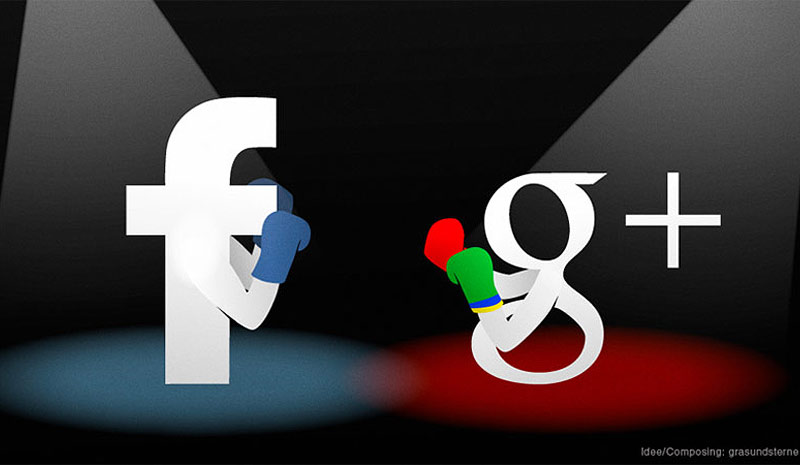
"Vic was just this constant bug in Larry's ear: 'Facebook is going to kill us. Facebook is going to kill us,'" says a former Google executive. "I am pretty sure Vic managed to frighten Larry into action. And voila: Google+ was born."

2. There is a very cool example from Popular Science about ants and the biological example of how conservatism (often based out of fear) can keep organizations from meeting its full potential 


The article chronicles studies of ants and how they cooperate together to carry larger pieces of food for long (relative to the spatial sizes of ants) distances. It was partially due to the ants conformist mentality, but there was much to be learned about their group leadership and efficiency.

Specifically, the group think of the group required that individual leader ants from outside the group get involved to re-direct them to the best, direct path until they lost track and then another leader ant would join the pack.

The conclusion of scientists?
In effect, says Feinerman, the larger groups were collectively too conservative, which prevented them from completing the task."
Read the whole report, there is a very cool video of the scene to kill some time as well.