Thursday, December 18, 2014
Fear Should Never Be Our Compass
On the night that Sony cancelled their movie "The Interview" because of terrorist threats from North Korea I stumbled across an article from a website named the Under 30 CEO. The article is entitled "How to Use Fear As Your Compass and Fuel for Growth".
While the author makes some good points in the article about the negative impact of fear, the idea that you could use fear as a compass for business success is ridiculous. It is clear that Sony used fear as a compass the last few days culminating in their decision to pull the movie "The Interview" from theaters. Needless to say that didn't turn out well. In addition to the potential for massive losses on the movie they are suffering a blistering beat down in the court of public opinion.
How about replacing fear as our compass with things like courage, integrity or passion? No doubt you can use fear as a compass or to fuel your activities - but the consequences of doing so can lead you to a place with dysfunctional organizations, uninspired teams and poor performance.
America is better than this - we shouldn't be bullied and run from what we believe in. We also shouldn't be teaching our young business leaders to use fear as a compass. Whether in business or in life, having a deep and abiding sense of who you are when fear comes calling will keep you from making decisions that take you or your organization to the wrong places.
Wednesday, October 29, 2014
Apple Pay - A Lesson in Disruption
While Apple's recent roll-out of the iPhone 6 and 6+ garnered headlines for the latest iteration of its popular product - it was a software feature that may end up being the real disruptive force behind the most recent product iteration.
Apple Pay leverages the features of the iPhone, namely the Touch ID button that unlocks the phone, along with a new communications format called Near Field Communication or NFC to securely transmit payment information in a way that should virtually eliminate credit card ID theft. It combines the three security elements of 'what you know' (typically passwords), 'what you have' (in this case your iPhone) and 'who you are' (your fingerprint through Touch ID) to create the safest electronic payment option on the market.
Not to mention it is extremely easy to use, requiring only that you hold your phone in near proximity to the card reader and press your Touch ID button.
While this technological innovation is a great example of a brave company approaching product design, the market reaction by competitors shows what happens when fear drives product development and leads to short-term decision making that harms long-term prospects.
This was chronicled in the New York Times discussion of CVS and Rite-Aid's decision to abandon Apple Pay after only a few days of use. While normally that would be a warning sign for a new technology's future - it is the reason these retailers dumped the payment approach that signals a bright future rather than dread.
As background, these retailers have been working on a payment technology since 2012 in an attempt to avoid paying the large payment card companies and banks fees that can range as much as 2-3% of the transaction total and in an attempt to collect purchasing date on their customers. From the beginning they approached the solution from the mindset of a company attempting to save 2-3% and add it to the bottom-line rather than a company that is focused on creating an easy to use consumer product that solves a problem.
This rival technology is known as Merchant Customer Exchange or MCX and is still months away from roll-out. And rather than a single touch of the cell phone would instead generate a QR code that is displayed on the merchant's checkout terminal. Customers who have already linked their bank accounts to the CurrentC system would scan the QR code from the terminal and the transaction would complete.
So CVS and Rite Aid have chosen to hitch their retail futures to a much more complicated system that is built to serve the merchant rather than the consumer, is still months away from rollout and will likely be irrelevant by the time it gets to market because of the adoption of Apple Pay by consumers.
Tim Cook, Apple's CEO, summed it up best during a discussion at a conference in California:
Apple Pay leverages the features of the iPhone, namely the Touch ID button that unlocks the phone, along with a new communications format called Near Field Communication or NFC to securely transmit payment information in a way that should virtually eliminate credit card ID theft. It combines the three security elements of 'what you know' (typically passwords), 'what you have' (in this case your iPhone) and 'who you are' (your fingerprint through Touch ID) to create the safest electronic payment option on the market.
Not to mention it is extremely easy to use, requiring only that you hold your phone in near proximity to the card reader and press your Touch ID button.
While this technological innovation is a great example of a brave company approaching product design, the market reaction by competitors shows what happens when fear drives product development and leads to short-term decision making that harms long-term prospects.
This was chronicled in the New York Times discussion of CVS and Rite-Aid's decision to abandon Apple Pay after only a few days of use. While normally that would be a warning sign for a new technology's future - it is the reason these retailers dumped the payment approach that signals a bright future rather than dread.
As background, these retailers have been working on a payment technology since 2012 in an attempt to avoid paying the large payment card companies and banks fees that can range as much as 2-3% of the transaction total and in an attempt to collect purchasing date on their customers. From the beginning they approached the solution from the mindset of a company attempting to save 2-3% and add it to the bottom-line rather than a company that is focused on creating an easy to use consumer product that solves a problem.
This rival technology is known as Merchant Customer Exchange or MCX and is still months away from roll-out. And rather than a single touch of the cell phone would instead generate a QR code that is displayed on the merchant's checkout terminal. Customers who have already linked their bank accounts to the CurrentC system would scan the QR code from the terminal and the transaction would complete.
So CVS and Rite Aid have chosen to hitch their retail futures to a much more complicated system that is built to serve the merchant rather than the consumer, is still months away from rollout and will likely be irrelevant by the time it gets to market because of the adoption of Apple Pay by consumers.
Tim Cook, Apple's CEO, summed it up best during a discussion at a conference in California:
“In the long arc of time, you are only relevant as a merchant if your customers love you," Cook said, adding that early adoption of Apple Pay was “fantastic.”
Tuesday, August 19, 2014
Business Lessons from Ferguson
Lately I have found myself, like much of America, glued to the live feeds of the late night scenes of violence occurring in Ferguson, MO. The tragic events of Michael Brown’s death and the subsequent bouts of violence are at the heart of the story, but watching the scenes of violence play out between rioters and cops in Ferguson remind me of something closer to home for the Corporate Bravery audience.
The clashes between the police forces (city, highway patrol, etc) have been the subject of much debate over the past week and half for the emerging story line of increasing militarization of America’s police departments. This story line even prompted an Op Ed by emerging presidential candidate Rand Paul with his Libertarian take on the issue.
I am not writing today to continue that theme or add some new wrinkle to that conversation, rather to talk about this increasing militarization of all parts of our lives.
Corporate Bravery was started to bring light to the increasing levels of fear that are encroaching upon all corners of our lives, but specifically on how those aspects of fear prevent us from living bold lives in the marketplace.
| Security barriers surrounding Wall Street |
The front entrances to our office buildings look like grim fortresses that communicate anything but a welcoming appearance to visitors, business partners and employees. Our time and attendance procedures and policies tell our employees that we can't trust you and our lack of flexible work arrangements indicate a complete disregard for the real issues that we face on a daily basis.
Just listen to some of the recent quotes from law enforcement officials around the nation regarding the situation in Ferguson as published in various national media outlets over the past week:
Wednesday, June 11, 2014
The Future of Higher Education
While we usually profile companies, industries or people who are conducting business boldly and not buffeted by fear - I wanted to provide an example of an industry that is driving itself into extinction. It exhibits many of the characteristics of fearful companies and organizations such as losing their sense of identity, chasing the competition and getting stuck in a business model that not only lacks a moat but is increasingly failing.
I am re-posting a series of posts in its entirety that I previously wrote for the Epipheo Underground blog a few months ago. I am motivated to do this because of a couple of new events this past week that only serve to reinforce my original premise - that higher education as we know it is dying and will look dramatically different within 10 - 15 years.
Those events include:
The primary reason is that the return on a college education — for most people — stinks. In fact I might even say that it is fast becoming one of the worst investments you can make. I would even argue that, by the time my children are old enough to graduate college, it could be a worse investment than buying a brand new automobile — and we all know that you lose 40% of that investment as soon as you drive it off the lot.
U of M's North Quad
I am re-posting a series of posts in its entirety that I previously wrote for the Epipheo Underground blog a few months ago. I am motivated to do this because of a couple of new events this past week that only serve to reinforce my original premise - that higher education as we know it is dying and will look dramatically different within 10 - 15 years.
Those events include:
- The expansion of the federal government's "Pay As You Earn" program
- The continued march towards the five 'power conferences' breaking away from the NCAA
With these two current events as the backdrop, I present to you the original post originally published on the Epipheo Underground on March 10, 2014:Beth Akers, a fellow in the Brookings Institution's Brown Center on Education Policy, says the move could also unintentionally push college tuition prices higher. “The income piece is a necessary safety net for borrowers. It gives security to not be afraid to take on debt to go to college, but the forgiveness part isn’t always necessary. It induces people to borrow more than they need to, which can have a negative impact on college prices.”
I have three kids ages six and under, and I am not saving for college.
Sounds irresponsible doesn’t it? Probably sounds even more irresponsible considering that I have an undergraduate business degree, an MBA in Finance, and currently lead the Finance/Accounting team at Epipheo.
What if I also told you that I am not pushing my children into some type of AAU sports program in the hopes of driving them to an athletic scholarship? You might still call me crazy. But, before you stop reading, I have a logical and possibly even sane rationale for these financial choices.
The primary reason is that the return on a college education — for most people — stinks. In fact I might even say that it is fast becoming one of the worst investments you can make. I would even argue that, by the time my children are old enough to graduate college, it could be a worse investment than buying a brand new automobile — and we all know that you lose 40% of that investment as soon as you drive it off the lot.

Thursday, May 8, 2014
Fear of Failure is Hurting America's Entreprenuerial Standing
As Americans we are hard wired from generations dating back to Ellis Island to be a part of the opportunities that America created. We were risk takers, crossing the Atlantic against all odds in the search of a better future.
But our sudden and startling transition to a market based on fear was driven home by a headline in the USA Today in December 2013 - “Is too little market fear something to fear?” Do you mean to tell me that we don't have enough to fear that we now have to worry about not having enough fear?
A recent study by the Brookings Institute shows that in 2008 for the first time in at least decades (but possibly in the nation’s history due to poor historical data) job destruction now outpaces job creation - see chart below. It isn’t that companies are failing more on a percentage basis, but rather there is a drought of new business creation - and our own personal fears of failure or risking the safety of what we have today is a big reason for this trend.
Each year the Global Entrepreneurship Monitor (GEM) publishes an annual report on the environment for entrepreneurship around the world. The GEM is a research program initiated
in 1997 as a joint venture between academics at London Business School in the UK and Babson College in the United States. From its first survey in 1999, GEM has grown into a consortium of more than 400 researchers from 99 economies over its 14 year history. In the 2012 report it had this to say about the environment for new business creation around the world:
Risk-taking can pose considerable challenges for potential entrepreneurs. Universities and business schools around the world can generally teach the basics of entrepreneurship, boosting peoples’ abilities to perceive opportunities and their skills for starting businesses. A key stumbling block, however, is one’s inherent fear of failure. This can counteract the drive to start a business, even when the expected returns from entrepreneurship have better prospects than the next best alternative. People may have differing levels of fear of failure and conditions in the institutional environment, such as bankruptcy legislation, which could deter would-be entrepreneurs.
While obviously reflective of the economic environment in those countries the startling evidence in the report shows that those countries with the most to lose in terms of real economic value (meaning opportunity cost of leaving a high paying job, blowing through a savings or retirement account, etc) were the countries showing the most fear.
Thursday, April 24, 2014
An Inside Look at Pixar's Bravery
Courtesy of Pixar Animation Studios
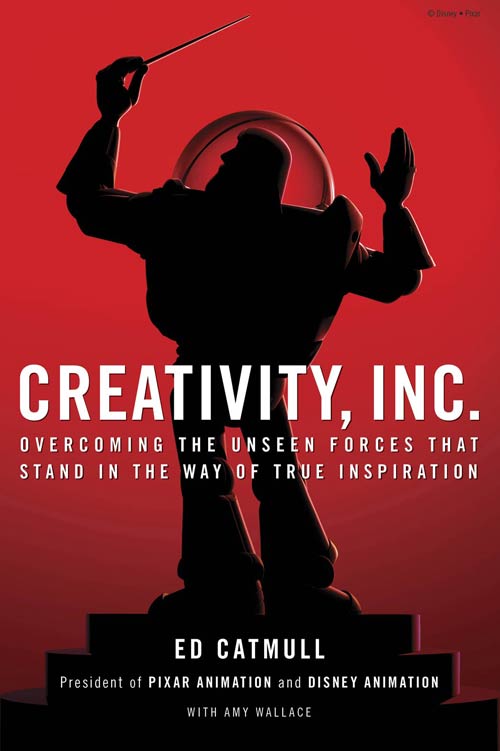
I was excited when I heard that Ed Catmull was releasing a book earlier this year. It is not as though I knew a lot about Ed, but I had read about him in previous tomes on Steve Jobs and because of the perspective of those other accounts I had assumed that it was Jobs' magic touch that had given Pixar it's DNA.
However, when you consider that Ed has been a constant from the earliest days in Lucas Films to the Steve Jobs run standalone Pixar and now under the control of Disney - you start to realize that he has been a bigger part of the magic than perhaps people really understood.
As a result of this book the spotlight is being shown on Pixar as a business and there have been some great articles of late discussing the magic that is Pixar. One of the more comprehensive reviews is the recent article in Fast Company. If you don't have time for Ed's book in the short-term then you must read this article for a nice primer - chances are you'll be wanting more.
The article gives some amazing insights into not only the aspects of Pixar's culture but some of what created and continues to sustain that culture. It is important to understand some of those aspects because they have been extremely successful. Consider the following:
- 14 consecutive #1 box office hits
- Over $7 billion in world box office receipts
"They threw you into a lot of different things to try and eliminate fear from the creative process," he says. This meant improv classes, drawing classes, learning from people who were the best in their field--all in the interest of attaining confidence in your own artistic ideas. “Fear is the biggest killer of creativity,” Schlumberger says. “In order to cultivate a strong creative environment, you need to make people comfortable in expressing their ideas."
Subscribe to:
Posts (Atom)