A friend who is reviewing my book proposal read one of my chapters and it made him think of this classic Monty Python skit.
I suppose this is one way to be brave, although I don't advocate physical violence.

Monday, January 6, 2014

Thursday, January 2, 2014
Vita-mix's Identity Leads to a Brave Future

While the technology behind the blender are impressive (blades spinning at 240mph and the conical shape of the container that creates a vortex that emulsifies food), it was another innovation started by its founder, William Grover "Papa" Barnard, that impacts how we buy and sell today. According to a recent BusinessWeek article,
"It took some fast talking to convince customers that turning solid foods into liquids was a good idea. But Barnard was a skilled salesman and found that people were more likely to buy his blender if they could see it demonstrated. So one evening in 1949, he donned a pinstriped, double-breasted suit and headed to the downtown Cleveland studios of WEWS, where he showed off the “home miracles of the Vita-Mix machine” on live television in what became the first infomercial."Barnard must have been brave at the time to sell the way he did. No one had ever bought significant air time with a specific pitch to sell a product and many of the aspects of his pitch can be found in infomercials today.

The most impressive thing about Vitamix is how it stuck to an identity over decades, when growth was stagnant, when only hippies were its customers (Ads from this period suggest its blenders were marketed mainly in fringe publications to mystical, earth-worshiping hippies.), when people had never heard of blenders or turning solid food into liquids. They could have been impatient, and if they were chasing fast growth or being driven by shareholder interests they might have. Instead they stuck with who they are...
“We never gave up,” Berg says. “We were doing research, publications, explaining how a high-performance blender can improve your health. The Internet had a big impact. We, as an organization, have stayed with our same vision, but all these different trends have made it easier for people to realize how big an impact a Vitamix can have.”It wasn't without a moment of weakness that led Vita-mix to experiment with products that, while still serving is primary purpose of healthy lifestyles, were outside the primary thrust of the product categories they were known for.
"The decades of focusing on health, even as most Americans were not, produced some lean years and curious choices. During the ’70s and ’80s, Vitamix experimented with selling exercise bikes, trampolines, and juicers."But at the end they are still the company that Barnard founded. Jodi Berg, Barnard's great granddaughter, runs the company as CEO today. Each of the five company CEOs including Berg and Barnard were family members and it is still family owned today. Jodi sums up this unwavering identity best in this quote from the magazine,
“As you can imagine, we endured decades of the whole world going through phases of convenience, fast food, pieces and parts, extract the nutrients and give it to me in a pill, stick it in my cereal, the Atkins diet, and all the rest. But we never lost sight of that vision of helping people eat healthier.”So why is knowing who you are as an organization and staying true to that identity so important in a business context, and more importantly in the context of being brave? Because being brave starts with having a clear and concise idea of the organizational identity that answers questions such as; what markets do we serve, who are our customers, how do we compete best for those customers, what kind of skills and people are necessary to accomplish our goals, what is our financial philosophy, and what work environment allows our people to be their best? Vita-mix can answer these questions clearly and it shows.
To learn more about their full company history, visit the Vita-mix company history page.
Tuesday, December 17, 2013
What Happens When A City is Brave

In the few months since I started this blog I have profiled brave business leaders and what it looks like to overcome fear in a corporate context but I want to talk today about being a brave city.
A city is different than a corporation because it is the people that makes a city and democracy is the ultimate form of accountability. Business leaders and eras of leadership can define a corporation and while political leaders can leave a mark it is the people of the city that create the culture and define who a city is.
An interesting case in fear and bravery is Cincinnati. It happens to be my adopted hometown (I live in a suburb and own property in the city) and I have learned a few things about the culture of the community in the decade and a half since I moved there.
As background, Cincinnati was settled largely by Irish, Italian, and German immigrants - emphasis on the German. And each people group influenced the city in various ways. All three contributed to the heavy Catholicism, the Italians contributed to the architecture and the Germans contributed the staunch conservatism. Not political conservatism - although that is a hallmark of today's political influences, but rather a penny pinching, survive a famine or the Great Depression kind of conservatism.
This DNA manifests as a change aversion deeper than anything seen in other parts of the United States. At its core this change aversion is rooted in fear. Fear of trying new things, of stepping out boldly, of trying new modes of transportation, of embracing new industries. One of the best historical examples is when the 'Queen City' (that is the name we were given by Longfellow when we were the largest city in the West) placed a bet on barges as the nation's transportation future instead of the railroads and subsequently watched Chicago flourish and surpass Cincinnati as an inter-modal and commodities hub.

Or what about the half-finished subway? That's right, what began as a vision for 7+ miles of subways connecting previously disconnected neighborhoods in 1910 for a sum of $6 million ended in decades of squabbling over escalating costs and questions about the viability of rapid transit in a period of the automobile. What is left is hollow tunnels that exist to this day with no tracks and no riders.
If you live in Cincinnati, you are sick of hearing the famous Mark Twain quote, "When the end of the world comes, I want to be in Cincinnati because it's always twenty years behind the times."

In its current incarnation the plan has weathered multiple elections, changes in mayoral and city council support to the point where $35 million has been spent to relocate utilities, build 10 blocks of track, buy the actual streetcars, among other investments only to see the new mayor halt all construction at the risk of losing $45 million in federal transportation spending.

(overview of current status, cost to complete & abandon - h/t Cincy Streetcar Blog)
For a city that has seen a massive renassiance over the past 10 years it is a line in the sand. After turning the tide with an emerging start-up scene, the re-birth of a great neighborhood in OTR (Over-the-Rhine), an improving reputation through movies and the media, the city had finally started to shake off the rust belt malaise that had beset it for the past few decades. Being at the precipice of a new story for the city - one that embraces change, is adventurous, and willing to make bold gambles only makes the current struggles that much more difficult to swallow for emerging Millenials and Gen X'ers who have fallen in love with the city only to watch fear creep back into the city's psyche.
The question for the city now is do we continue to live with the embarrassments of the past century or do we shake off the labels and condescension for a new future. The rest of the story will be written over the coming weeks and months but what is clear is that there is a growing group of people in the city interested in writing a new story for Cincinnati. One that isn't rooted in fear and failure but rather on hope, optimism, and bravery.
Wednesday, December 11, 2013
Nelson Mandela and the Art of Politics

Yesterday I wrote about Nelson Mandela's view on fear and the lesson it provides us today in our busy corporate lives. Today I want to focus on another Mandela quote that teaches us about a component of living a brave corporate life.
"A good leader can engage in debate frankly and thoroughly, knowing that at the end he and the other side must be closer, and thus emerge stronger. You don't have that idea when you are arrogant, superficial, and uninformed."I spend a whole chapter in my upcoming book Corporate Bravery on politics. Not the politics that we think of from Fox News and MSNBC but the true essence of politics. Corporate politics has the ability to inject fear into a corporate culture but that doesn't have to be the case. Politics are an essential part of getting things done since at its core it is just finding common ground between two differing perspectives or positions.
Whether in business or in government the true art of politics has been lost. Listening to opposing positions, searching for a compromise, using the power of a position to move people closer to a reasonable solution are all lost arts. However, they are extremely necessary for a functional organization.

This infographic from the Economist highlights the growing divide of politic discourse in our government and unfortunately we imitate in a corporate context what we see played out on television in our government.
Jack Welch had this to say about the lost art of schmoozing - his way of saying politics:
“You have to schmooze. You can’t suddenly burst out of your office to build relationships when you hear rumbles of trouble from down below, and it’s certainly too late by the time a crisis flares. No, schmoozing has to be what you do all the time as a leader; it has to be a massive part of your job.
Building — in two big fat words — trust and transparency. And look, we’re not talking about the standard, ho-ho-ho kind of social schmoozing you do with your customers and your team and your boss. That’s easy. That’s like President Obama schmoozing with Nancy Pelosi, or John Boehner schmoozing with Eric Cantor.
Leaders have to do something harder and more essential; something that can feel awkward at first. You have to schmooze with your known “adversaries” too, say, for instance, your union, or the group of employees who hate your new strategy and want the old one back. The resistors that exist in every organization. The perennial naysayers. Smart and annoying. Them.”
Nelson Mandela understood this better than anyone. He built trust with his adversaries. They may not have agreed with his position but through the trust that he had built they were willing to work with him to find a better solution.Tuesday, December 10, 2013
Nelson Mandela on Fear
With the public ceremony of Mandela's life occurring as I write this, you are probably thinking do we need another tribute to Nelson Mandela. This post isn't necessarily a tribute as much as it is an opportunity to recap what we learned about fear and courage from Nelson Mandela and how this can be applied to your daily work.

With his recent passing there is no shortage of quotes being repeated from his many public speeches over the years. There are a couple of quotes that are very relevant to where we are today as a society and a business culture and that I plan to use in the book. This post will focus on one specifically with another post to follow on the second.
The first speaks to fear specifically. As a recap of what Mandela had to overcome from a fear perspective to reach the heights that he was able to achieve here is a summary of the ways he had to overcome fearful situations:
Instead, we need to put our employees in situations that can be difficult, and stretch their capabilities. In a sense interject opportunities for personal fear in a way that allows them to overcome and learn from their decision making processes. You can never truly make brave decisions unless you have been through the fire and conquered those situations where fear could reign.
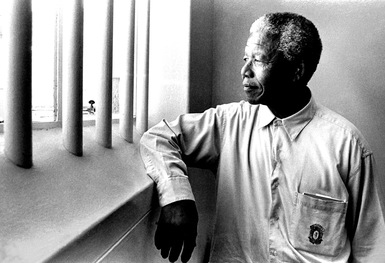
With his recent passing there is no shortage of quotes being repeated from his many public speeches over the years. There are a couple of quotes that are very relevant to where we are today as a society and a business culture and that I plan to use in the book. This post will focus on one specifically with another post to follow on the second.
The first speaks to fear specifically. As a recap of what Mandela had to overcome from a fear perspective to reach the heights that he was able to achieve here is a summary of the ways he had to overcome fearful situations:
- In 1941 he fled to Johannesburg to escape an arranged marriage and found work as a night watchman at Crown Mines, but was fired when the headman discovered he was a runaway.
- In 1947 as his career as an attorney was starting to begin he lost a mentor and daughter in death.
- Working as a lawyer in the anti-apartheid movement, he was repeatedly arrested for seditious activities and, with the ANC leadership, was unsuccessfully prosecuted in the Treason Trial from 1956 to 1961.
- In 1962 he was arrested, convicted of conspiracy to overthrow the state, and sentenced to life imprisonment in the Rivonia Trial.
"I learned that courage was not the absence of fear, but the triumph over it. The brave man is not he who does not feel afraid, but he who conquers fear."As I have been writing the book Corporate Bravery it there has been a central question that must be answered. Many want to deal with fear by insulating and inoculating themselves and those they love from the opportunity to experience fear. And in many ways it is this attempt at dealing with fear that creates its own level of cultural fear in many organizations. This doesn't mean that we shouldn't try to eradicate situations that create a culture of fear and cause decision making to be driven by it, but that we shouldn't try to avoid situations that are scary in a business context.
Instead, we need to put our employees in situations that can be difficult, and stretch their capabilities. In a sense interject opportunities for personal fear in a way that allows them to overcome and learn from their decision making processes. You can never truly make brave decisions unless you have been through the fire and conquered those situations where fear could reign.
Tuesday, November 12, 2013
Fearless at J Crew
What if you could triple the size of your business in 10 years? Would you be happy? That could be pretty easy if you were a $1/2 million small business but what if you were J Crew and generated hundreds of millions of dollars in sales in 2003? That would be an accomplishment.
In a recent article in Fast Company they profiled J Crew with a special emphasis on Jenna Lyons, the President who makes interesting tabloid material in the New York area and in particular the business relationship she has with CEO Mickey Drexler, the former GAP CEO. That combo did exactly that in 10 years and put J Crew back on the map in the retailing world.

Possibly even more exciting than the result is that they did it by being brave. They have a risk taking culture with design, understand the value of a long-term perspective, and deeply understand the individuality of their business and the people in that business. Lets look at their comments from the article for all three areas of bravery.
1. Risk Taking - one of the key areas that J Crew has been able to revive their brand has been through fresh and exciting design. But that didn't happen by accident and it took fresh thinking and risk taking to create a buzz necessary to regain its stride:
This is borne out in its constant churning out of new brands that are spun out from great hits and an identification with a niche customer group such as The Ludlow Shop and the Liquor Store that serve as Petri dishes for new products and concepts.

2. Long-term perspective - Despite spending a little time during the past decade as a public company, J Crew was taken private again 5+ years ago. It left an interesting mark on their view of how investor pressure creates fear and short-term thinking that is not best for good decision making:
The article goes on to say, "when I ask Lyons how going private in 2011 helped the company, she immediately cites the freedom to invest more in IT infrastructure - not the first thing you'd expect to hear from a native creative. 'It's hard to make those kinds of capital expenditures when you're public.'"
3. Individuality - In addition to being unique individuals who express their own individuality in a world that can be unforgiving to those who are not the prototypical beauty we get a glimpse of how Lyons and Drexler have been able to create a culture that now only supports individuality but uses it as a competitive weapon.
In a recent article in Fast Company they profiled J Crew with a special emphasis on Jenna Lyons, the President who makes interesting tabloid material in the New York area and in particular the business relationship she has with CEO Mickey Drexler, the former GAP CEO. That combo did exactly that in 10 years and put J Crew back on the map in the retailing world.

Possibly even more exciting than the result is that they did it by being brave. They have a risk taking culture with design, understand the value of a long-term perspective, and deeply understand the individuality of their business and the people in that business. Lets look at their comments from the article for all three areas of bravery.
1. Risk Taking - one of the key areas that J Crew has been able to revive their brand has been through fresh and exciting design. But that didn't happen by accident and it took fresh thinking and risk taking to create a buzz necessary to regain its stride:
"Under Drexler and Lyons, J. Crew would become a company of constant and freewheeling experimentation, iteration, adaptation."
This is borne out in its constant churning out of new brands that are spun out from great hits and an identification with a niche customer group such as The Ludlow Shop and the Liquor Store that serve as Petri dishes for new products and concepts.
"Before Drexler came to J Crew designers were ordered to develop products that would meet specific merchandising goals. 'We were told we need this bucket and this bucket', says J Crew head of women's design Tom Mora. 'I need a merino sweater that is $48 that has a stripe.' And you are jamming your design into that bucket and that's what you get a design in a bucket. Drexler told Lyons not only to scrap the buckets but also she says, 'Don't tell me what you're doing, don't show any of the merchants, just go and do it and then show me.' In generating those designs, Lyons' style and manner give her staff implicit permission to take risks."

2. Long-term perspective - Despite spending a little time during the past decade as a public company, J Crew was taken private again 5+ years ago. It left an interesting mark on their view of how investor pressure creates fear and short-term thinking that is not best for good decision making:
"Its aggravating to be a public company. People who own stocks could not care less about the long run. Everyone in the world has a quarterly report. Your owners and investors are looking for a result. But it takes 5 or 10 years to build a company." - Drexler
The article goes on to say, "when I ask Lyons how going private in 2011 helped the company, she immediately cites the freedom to invest more in IT infrastructure - not the first thing you'd expect to hear from a native creative. 'It's hard to make those kinds of capital expenditures when you're public.'"
3. Individuality - In addition to being unique individuals who express their own individuality in a world that can be unforgiving to those who are not the prototypical beauty we get a glimpse of how Lyons and Drexler have been able to create a culture that now only supports individuality but uses it as a competitive weapon.
"When experiments don't work out as well, all Lyons requires is for her staff to assume responsibility 'Jenna really loves people who are themselves, flaws and all"The last quote from the article doesn't exactly fit neatly into one of the three components of fear cultures but is a revealing anecdote of what creates fear in corporations today. The quote is from Drexler and speaks to the root of many of the causes of fear in our corporate cultures - and that is protecting what you have....
"America's companies are built to destroy creativity. If you become the head of a big company today, you're not the youngest person in the world. You have a contract. You get a jet. You have a huge overpaid salary. You get bonuses. Do you think that CEO is going to screw around with fast, creative change? No. And the board of directors, the last thing they want is someone who's going to change things."
Subscribe to:
Posts (Atom)